Temples and tīrthas
मन्दिर तीर्थ
Also written: hindu temple · jyotirlinga · shakti peeth · char dham · tirtha yatra · temple architecture · मन्दिर
A temple is built to the same plan as a body and as a cosmos. One passes from the outer gate through progressively more enclosed spaces to the garbhagṛha — the 'womb-chamber' — which is small, dark and unadorned. The architecture states the teaching: the movement is inward, and what is found at the centre is not larger but simpler.
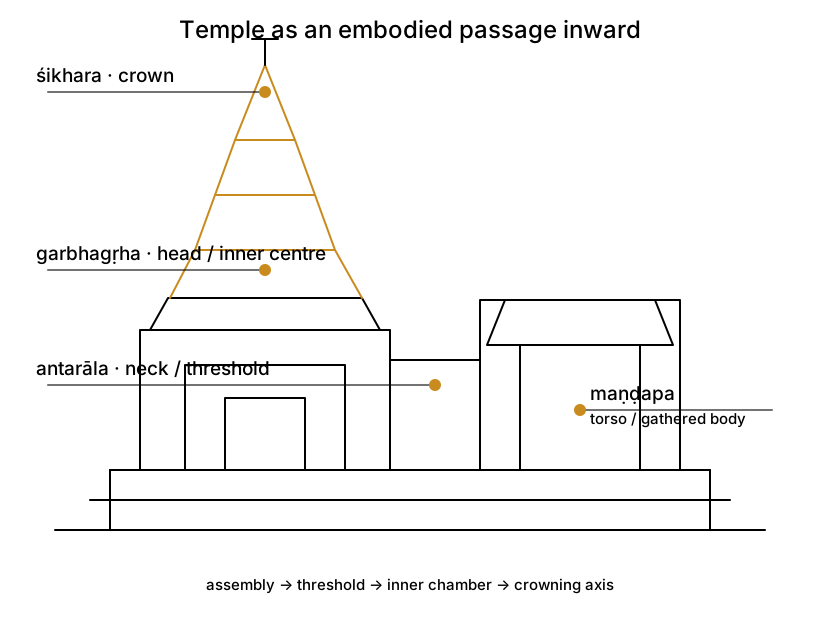
| Part | Corresponds to |
|---|---|
| Gopuram / śikhara | The crown; visible from far off |
| Maṇḍapa | The outer limbs; the space of assembly |
| Antarāla | The neck; the passage |
| Garbhagṛha | The heart — small, dark, containing the deity |
| Vimāna above it | The axis rising from the heart |
| Dhvaja-stambha | The suṣumnā; the axis of the whole |
The correspondence is not an afterthought imposed by later commentators. The Upaniṣads describe the body as a city with gates, and the deity as seated in a small chamber inside it, centuries before the stone temples were built.
पुरमेकादशद्वारमजस्यावक्रचेतसः। अनुष्ठाय न शोचति विमुक्तश्च विमुच्यते॥
puram ekādaśa-dvāram ajasyāvakra-cetasaḥ anuṣṭhāya na śocati vimuktaś ca vimucyate
The city of eleven gates belongs to the unborn one whose awareness is undistorted. Attending on it, one does not grieve; and being freed, one is free.
Pura — a walled city, with gates that can be counted. And the Chāndogya gives what is inside it, in a passage that reads like a description of a garbhagṛha written before there were any.
अथ यदिदमस्मिन्ब्रह्मपुरे दहरं पुण्डरीकं वेश्म दहरोऽस्मिन्नन्तराकाशस्तस्मिन्यदन्तस्तदन्वेष्टव्यं तद्वाव विजिज्ञासितव्यम्॥
atha yad idam asmin brahma-pure daharaṁ puṇḍarīkaṁ veśma daharo'sminn antarākāśas tasmin yad antas tad anveṣṭavyaṁ tad vāva vijijñāsitavyam
Now, in this city of Brahman there is a small lotus, a dwelling; within it a small space. What is inside that is to be sought — that indeed is to be enquired into.
And the Taittirīya names what the chamber is a chamber for — in three words, followed by the location.
सत्यं ज्ञानमनन्तं ब्रह्म। यो वेद निहितं गुहायां परमे व्योमन्॥
satyaṁ jñānam anantaṁ brahma. yo veda nihitaṁ guhāyāṁ parame vyoman
Brahman is the real, knowledge, the infinite. One who knows it as hidden in the cave, in the highest space —
Guhā, the cave, and parame vyoman, the highest space, are given as one location and not two. The temple resolves the apparent contradiction physically: the cave is at ground level and the tower rises from it, so the innermost point and the highest point are the same point on the plan. That is why the vimāna sits directly over the garbhagṛha and nowhere else.
Tīrtha
Tīrtha means a ford — a crossing place. The word is used for a place where the passage from one bank to the other is easier, which is why river confluences, coasts and mountain passes are so often tīrthas. The tradition also insists on the inner sense: the great tīrthas are truth, restraint, and compassion, and a person who carries impurity to the Ganges takes it home again.
The Bhāgavata puts that correction more harshly than any modern critic of ritualism has managed, and it puts it in one long compound sentence with a single verdict at the end.
यस्यात्मबुद्धिः कुणपे त्रिधातुके स्वधीः कलत्रादिषु भौम इज्यधीः। यत्तीर्थबुद्धिः सलिले न कर्हिचिज्जनेष्वभिज्ञेषु स एव गोखरः॥
yasyātma-buddhiḥ kuṇape tri-dhātuke sva-dhīḥ kalatrādiṣu bhauma ijya-dhīḥ yat-tīrtha-buddhiḥ salile na karhicij janeṣv abhijñeṣu sa eva go-kharaḥ
One who takes the corpse of three humours to be the self, who takes wife and the rest to be his own, who takes an image of earth to be worthy of worship, who takes water alone to be a place of crossing — and never so regards those who know: he is a cow, an ass.
| Network | Count | Character |
|---|---|---|
| Jyotirliṅgas | 12 | Somnāth, Mallikārjuna, Mahākāleśvara, Oṁkāreśvara, Kedārnāth, Bhīmaśaṅkara, Kāśī Viśvanāth, Trimbakeśvara, Vaidyanāth, Nāgeśvara, Rāmeśvaram, Ghṛṣṇeśvara |
| Śakti Pīṭhas | 51 (lists vary; 18 mahā) | Where the parts of Satī's body are said to have fallen — Kāmākhyā, Kālīghāṭ, Vaiṣṇo Devī and the rest |
| Chār Dhām | 4 | Badrīnāth, Dvārakā, Purī, Rāmeśvaram — the four corners of the land |
| Chota Chār Dhām | 4 | Yamunotrī, Gaṅgotrī, Kedārnāth, Badrīnāth in the Himālaya |
| Divya Deśams | 108 | The Viṣṇu temples sung by the Ālvārs |
| Pāḍal Petra Sthalams | 275 | The Śiva temples sung by the Nāyanmārs |
| Sapta Purī | 7 | Ayodhyā, Mathurā, Māyā (Haridwar), Kāśī, Kāñcī, Avantikā (Ujjain), Dvārakā |
Daily life — dinacaryā, ṛtucaryā and āhāra
The daily and seasonal routine, the classification of food by guṇa, the observances of an ordinary day, and th…
Social structure — varṇa, āśrama, kula and gotra
How the classical social order was meant to work: function, stage, family and lineage; what hardened into cast…
Family and marriage
Marriage as a saṃskāra rather than a contract, the saptapadī vows, the eight classical forms of marriage, and …
Festivals — the year as it is kept
The major observances through the lunisolar year, what each marks, and the pattern underneath them.…
Guru and paramparā
Why knowledge is transmitted rather than published, what the word guru means, the tests the tradition places o…
Seva and dāna — service and giving
Giving as an obligation rather than a virtue: the kinds of dāna, the classification by guṇa, anna-dāna, and th…
Last revised 2026-08-16. Corrections are welcome — see how this site is written.