The four Puruṣārthas — what a human life is for
पुरुषार्थ
Also written: purushartha · four aims of life · dharma artha kama moksha · पुरुषार्थ
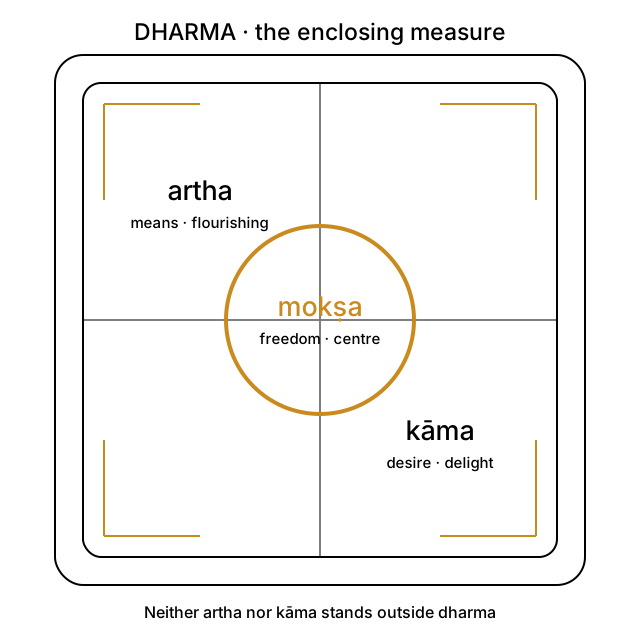
Puruṣa-artha: 'that which is sought by a person'. Sanātana Dharma names four, and — unusually among the world's traditions — it declares wealth and pleasure to be legitimate goals rather than concessions to weakness. What it insists on is their order.
| Puruṣārtha | Sanskrit | Meaning | Its own śāstra |
|---|---|---|---|
| Dharma | धर्म | Right conduct; the law of one's own being | Dharma Śāstra |
| Artha | अर्थ | Wealth, means, security, capability, power | Arthaśāstra |
| Kāma | काम | Desire, pleasure, beauty, love, aesthetic delight | Kāma Śāstra |
| Mokṣa | मोक्ष | Liberation — the end of the mistake of limitation | Upaniṣads, Vedānta |
Before the four — the fork that decides everything
The Kaṭha Upaniṣad puts a fork in front of every human being before any of the four aims can be pursued honestly. Two things present themselves: śreyas, the good, and preyas, the pleasant. They are not the same thing, and both take hold of a person.
अन्यच्छ्रेयोऽन्यदुतैव प्रेयस्ते उभे नानार्थे पुरुषं सिनीतः। तयोः श्रेय आददानस्य साधु भवति हीयतेऽर्थाद्य उ प्रेयो वृणीते॥
anyac chreyo'nyad utaiva preyas te ubhe nānārthe puruṣaṁ sinītaḥ tayoḥ śreya ādadānasya sādhu bhavati hīyate'rthād ya u preyo vṛṇīte
The good is one thing, the pleasant another; both, with different purposes, bind a man. It goes well for the one who takes the good; he who chooses the pleasant falls short of the goal.
श्रेयश्च प्रेयश्च मनुष्यमेतस्तौ सम्परीत्य विविनक्ति धीरः।
śreyaś ca preyaś ca manuṣyam etas tau samparītya vivinakti dhīraḥ
Both the good and the pleasant approach a person. The wise one, examining them all round, distinguishes between them.
The order is the whole teaching
Dharma comes first and last. Artha and kāma are pursued within dharma, never outside it; mokṣa is what the whole sequence is finally aimed at. The tradition's formula is dharmāviruddha — 'not opposed to dharma'. Kṛṣṇa says in the Gītā that He is desire itself when it is not contrary to dharma.
धर्माविरुद्धो भूतेषु कामोऽस्मि भरतर्षभ।
dharmāviruddho bhūteṣu kāmo'smi bharatarṣabha
In beings, I am desire that is not opposed to dharma, O best of the Bharatas.
The Mahābhārata ends with Vyāsa's protest — the most despairing line in the epic, and the one that states the logic of the four aims in a single sentence. Dharma is not opposed to wealth and pleasure; it is their source, and men abandon the source while chasing what flows from it.
ऊर्ध्वबाहुर्विरौम्येष न च कश्चिच्छृणोति माम्। धर्मादर्थश्च कामश्च स किमर्थं न सेव्यते॥
ūrdhva-bāhur viraumy eṣa na ca kaścic chṛṇoti mām dharmād arthaś ca kāmaś ca sa kim arthaṁ na sevyate
With arms raised I cry out — and no one listens to me! From dharma come wealth and pleasure; why then is dharma not practised?
And Kṛṣṇa names the three gates by which the whole structure is lost — the three that turn kāma from a legitimate aim into a destroyer.
त्रिविधं नरकस्येदं द्वारं नाशनमात्मनः। कामः क्रोधस्तथा लोभस्तस्मादेतत्त्रयं त्यजेत्॥
tri-vidhaṁ narakasyedaṁ dvāraṁ nāśanam ātmanaḥ kāmaḥ krodhas tathā lobhas tasmād etat trayaṁ tyajet
Threefold is the gate of ruin, destroying the self: desire, anger and greed. Therefore let one abandon these three.
| Pursued without dharma | Result |
|---|---|
| Artha alone | Accumulation without purpose; wealth that buys nothing worth having, and is defended against everyone |
| Kāma alone | Pleasure with diminishing returns; the appetite grows as the satisfaction shrinks |
| Artha and kāma together | The complete modern predicament: means and enjoyment maximised, meaning absent |
| Mokṣa attempted first | Escapism dressed as renunciation — the āśrama order exists precisely to prevent it |
| Dharma alone, rigidly | Sterile moralism; the letter kept and the purpose lost |
Mapped onto the four stages
| Āśrama | Dominant puruṣārtha |
|---|---|
| Brahmacarya — student | Dharma: learning what upholds, and acquiring capacity |
| Gṛhastha — householder | Artha and kāma, within dharma: the productive centre that supports all the others |
| Vānaprastha — forest-dweller | Dharma turning toward mokṣa: obligations handed on, attention turning inward |
| Sannyāsa — renunciate | Mokṣa alone |
Dharma
Right conduct, the ten marks, the five debts, and the daily obligations of a life.
Artha
Wealth as an instrument; the Arthaśāstra; why poverty is not treated as a virtue.
Kāma
Beauty, love, art and enjoyment as legitimate — and the rasa theory that grew from taking them seriously.
Mokṣa
What is meant by freedom, the four paths to it, and jīvanmukti.
In this section
Dharma as the first aim
Right conduct as the frame within which the other three aims are pursued: the daily obligations, the five debts, and the ten marks in practice.
Artha — wealth, means and capability
Why prosperity is a legitimate aim, the Arthaśāstra's treatment of economy and statecraft, and the difference between wealth held and wealth hoarded.
Kāma — desire, beauty and delight
Pleasure as a legitimate aim: the Kāma Śāstra tradition, the sixty-four arts, rasa theory, and the single condition the tradition places on enjoyment.
Mokṣa — liberation
What liberation means, why it is described as the removal of an error rather than the attainment of a place, the four paths to it, and jīvanmukti.
Dharma as the first aim
Right conduct as the frame within which the other three aims are pursued: the daily obligations, the five debt…
Artha — wealth, means and capability
Why prosperity is a legitimate aim, the Arthaśāstra's treatment of economy and statecraft, and the difference …
Kāma — desire, beauty and delight
Pleasure as a legitimate aim: the Kāma Śāstra tradition, the sixty-four arts, rasa theory, and the single cond…
Mokṣa — liberation
What liberation means, why it is described as the removal of an error rather than the attainment of a place, t…
The four Āśramas — one life, four dharmas
Brahmacarya, gṛhastha, vānaprastha and sannyāsa: the four stages of life, roughly a quarter each, what each is…
Brahmacarya — the student stage
The first quarter of life: upanayana, life in the teacher's household, the discipline of study, and the real m…
Last revised 2026-08-16. Corrections are welcome — see how this site is written.